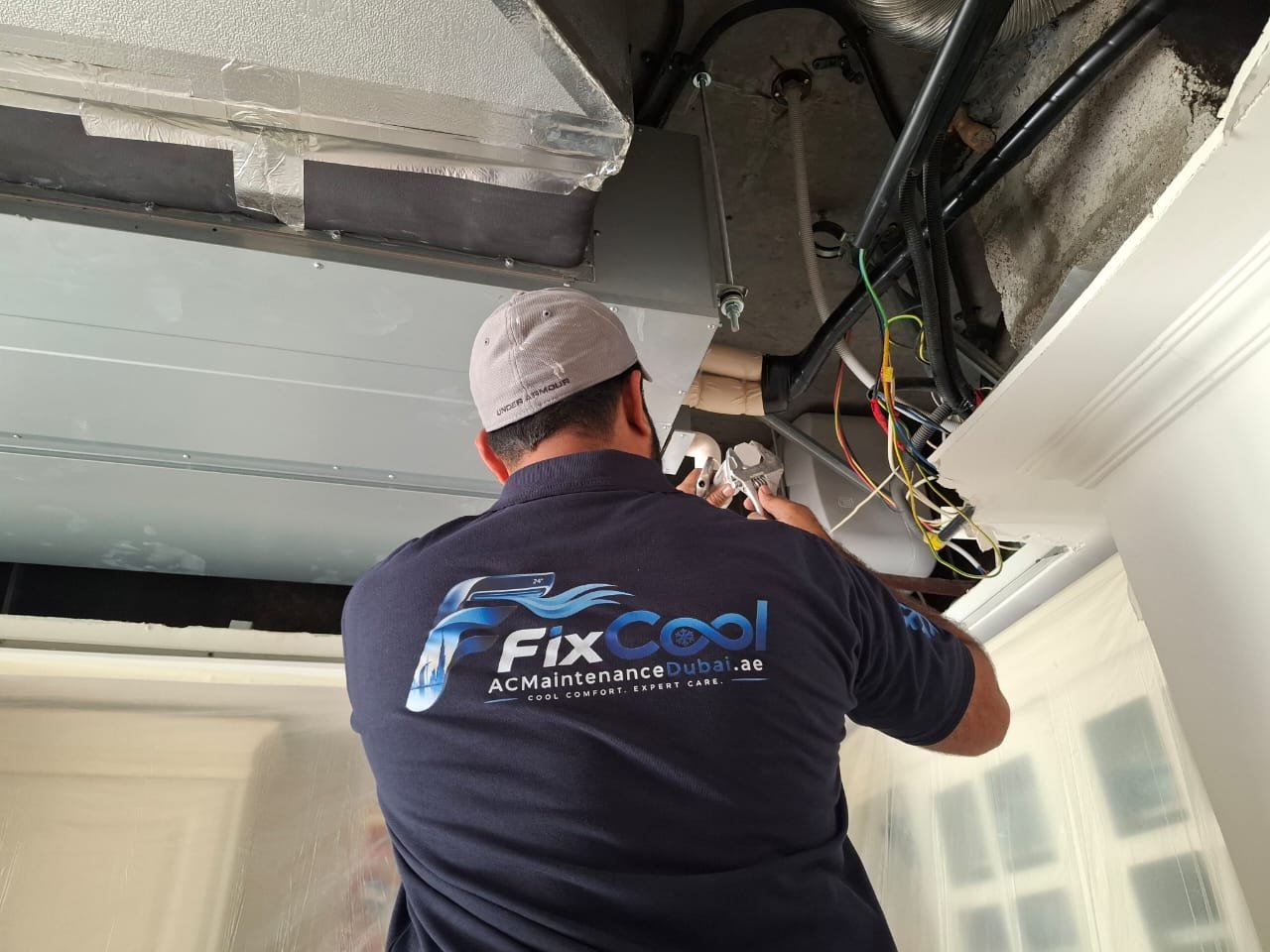
Finding a puddle under your indoor unit, or water dripping from a ceiling vent, is one of the most common AC complaints in Dubai homes. It often starts small, a damp patch on the wall or a slow drip onto the floor, and then gets worse in the hottest months, when your AC runs almost non-stop.
The good news is that most leaks have a simple cause. This guide explains why an AC leaks water, how to tell which problem you have, what you can safely do yourself, and when it is time to call a professional for AC repair.
Quick answer: In most cases, an AC leaks water because the condensate drain line is blocked, the air filter is dirty, or the evaporator coil has frozen and is melting. Switch the AC off, place a towel or bucket under the leak and check the filter. If the leak continues, call a technician instead of running the unit.
What to Do Right Away
- Switch the AC off at the remote or thermostat. If water is near any socket, light or wiring, also switch it off at the breaker.
- Catch the water. Place a bucket or towels under the drip and move furniture, rugs and electronics out of the way.
- Keep away from wiring. If water is dripping through a false ceiling or near lights, do not touch fixtures or switches with wet hands.
- Check the air filter. Pull it out. If it is covered in dust, it is a likely cause.
- Look for ice. If you see frost on the coil or pipes, leave the unit off until the ice melts completely.
- Take photos or a short video of the leak. It helps the technician and is useful if you need to inform your landlord or building management.
7 Causes of AC Leaking Water
1. Blocked Condensate Drain Line
Why it happens: Your AC removes moisture from the air, and that water leaves through a small drain pipe. In humid Dubai weather, an AC can produce a lot of this water. Dust, algae and slime build up inside the pipe over time and block it, so the water backs up and overflows from the indoor unit.
Signs: Water dripping from the indoor unit, a gurgling sound, or no water coming out of the outdoor drain pipe even though the AC has been running for hours.
What to do: Do not poke the pipe with sharp objects. A technician can clear the line with a pump or vacuum and flush it properly.
2. Dirty Air Filter
Why it happens: A clogged filter restricts airflow across the coil. The coil gets too cold, ice forms, and when the ice melts it drips more water than the drain pan can handle.
Signs: Weak airflow, a unit that takes longer to cool, and visible dust on the filter.
What to do: Clean or replace the filter. Our guide on AC cleaning vs duct cleaning vs deep cleaning explains what your home actually needs.
3. Frozen Evaporator Coil
Why it happens: Poor airflow, a faulty fan or low refrigerant can make the coil so cold that moisture freezes on it. When the unit switches off, the ice melts and water spills over.
Signs: Ice on the indoor unit or copper pipes, then a sudden flood of water after the AC is turned off.
What to do: Turn the AC off and let the ice melt. If it freezes again after you have cleaned the filter, you need a technician.
4. Low Refrigerant or a Refrigerant Leak
Why it happens: If the refrigerant level is low, the pressure inside the system drops and the coil can freeze. Refrigerant does not get used up, so low levels mean there is a leak somewhere.
Signs: Weak cooling, ice on pipes, a hissing sound, or higher electricity bills. See our post on why your AC is not cooling in Dubai for more signs.
What to do: This is not a DIY job. Refrigerant must be handled by a trained technician who can find the leak, repair it and recharge the system.
5. Cracked or Rusted Drain Pan
Why it happens: The drain pan sits under the coil and catches condensate. In older units it can rust, crack or warp, so water drips through instead of flowing to the drain.
Signs: Water leaking even though the drain line is clear, or rust marks under the indoor unit.
What to do: A damaged pan usually needs to be repaired or replaced by a technician.
6. Incorrect Installation or a Tilted Unit
Why it happens: The indoor unit and its drain pipe must slope slightly so water can flow out. If the unit is not level, or the pipe sags or has a dip, water collects and spills.
Signs: The leak started soon after installation or after the unit or wall was moved, or water drips from one corner of the unit.
What to do: Have a technician check the levelling and the slope of the drain pipe.
7. Faulty Condensate Pump
Why it happens: Some ceiling, cassette and ducted units use a small pump to push water out. If the pump or its float switch fails, water collects and overflows.
Signs: A buzzing pump with no water leaving the system, or a leak that appears at the same time as a pump noise.
What to do: The pump needs to be tested and repaired or replaced.
What You Can Do Yourself and What to Leave to a Technician
| You Can Safely Do | Leave to a Technician |
|---|---|
| Switch the AC off and catch the water | Clearing a blocked drain line |
| Clean or replace the air filter | Checking or refilling refrigerant |
| Check for ice and let it melt | Repairing a cracked drain pan |
| Take photos of the leak | Re-levelling the unit or fixing the pipe slope |
| Check the outdoor drain pipe for flow | Testing or replacing a condensate pump |
Why You Should Not Ignore a Leaking AC
A small drip can turn into a bigger problem quickly. Water can stain false ceilings and walls, damage flooring and furniture, and cause mould and a musty smell. If water reaches electrical parts, it can also be a safety risk. A leak is also a sign that something else, such as airflow or refrigerant, may be wrong, so the unit is probably working harder than it should.
When to Call a Professional for AC Repair
Call a technician if:
- The leak continues after you have cleaned the filter
- The coil or pipes keep freezing
- You hear hissing or gurgling sounds
- Water is dripping from a ceiling, a false ceiling or near electrical points
- The AC is cooling poorly as well as leaking
- You are not sure what is causing the leak
A professional AC repair visit usually includes inspecting the unit, clearing the drain line, checking the coil and airflow, testing the refrigerant level and pump, and checking that the unit is level. Fixing the cause early costs far less than repairing water damage later.
How to Prevent AC Leaks in Dubai
- Clean the filters regularly. In dusty or sandy periods, check them every few weeks.
- Book regular AC maintenance. A service before summer and another during the year keeps the drain line, coil and pan clean.
- Do not ignore early signs such as weak airflow, unusual noises or damp patches.
- Keep the outdoor drain outlet clear of dirt, debris and insects.
- Choose a qualified installer so the unit is level and the drain pipe is sloped correctly.
FAQs
Is it normal for my AC to drip water?
Water dripping from the outdoor drain pipe of a split AC is normal. Water dripping inside your home, from the indoor unit or ceiling, is not.
Why does my AC leak more in summer?
When the weather is humid, your AC removes more moisture from the air, so more water passes through the drain system. A weak or blocked drain shows up as a leak.
Can I keep using an AC that is leaking?
It is better not to. Running it can spread the water, damage your property and make the underlying problem worse.
Can a leaking AC cause a short circuit?
It can, if water reaches wiring, switches or the electrical parts of the unit. Switch the AC off and call a technician.
How long does an AC leak repair take?
It depends on the cause. A blocked drain line is usually quick to clear, while a refrigerant leak or a damaged pan takes longer. A technician can tell you after an inspection.
Need Help With a Leaking AC?
Contact FixCool for AC repair in Dubai. Our technicians will inspect the unit, find the cause of the leak and fix it before the water damages your home. Call or WhatsApp us on +971 55 430 6974 to book a visit.